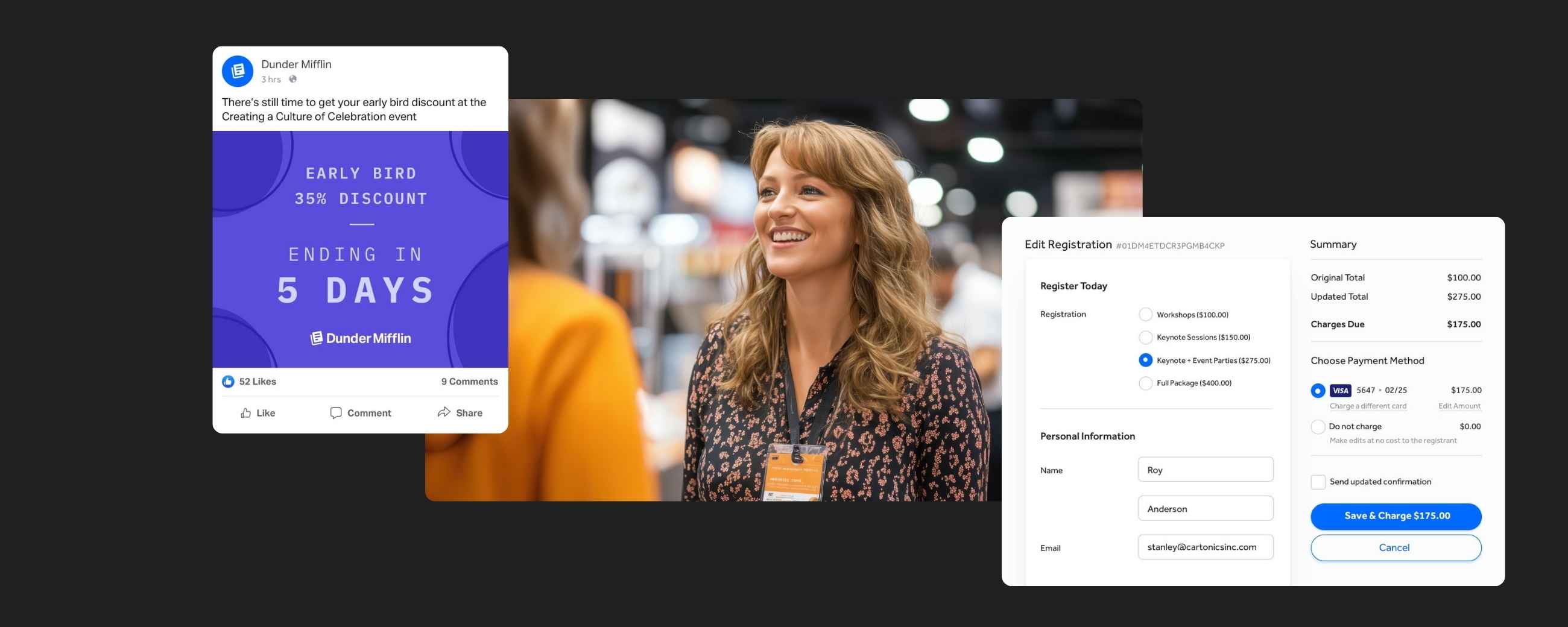
Long before they show up at your event, every attendee follows a journey to get there. Depending on how you design it, this journey will either work for you or against you. An event registration funnel is the mapped-out experience that guides potential attendees from initial awareness to onsite attendance and every step in between.
A strong funnel requires understanding the steps people take and optimizing each one. This guide will uncover what it takes to create a compelling, low-friction event funnel that naturally maximizes attendance.
What Is an Event Registration Funnel?
An event registration funnel is the step-by-step experience someone goes through before they register, while they’re registering, and after they’ve signed up. Each of the six stages: awareness, interest, consideration, registration, and engagement—plays a specific role in moving an attendee closer to showing up.
Why You Need Funnels for Events
Event funnels are more than just a nice-to-have; they’re necessary for optimal results.
✨ They reduce confusion and friction in the registration process
✨ They boost conversions by guiding people step by step
✨ They keep attendees engaged after they register, not just before
✨ They help recover abandoned registrations
✨ They create predictable revenue patterns
Many event organizers are losing signups without realizing it. A well-built funnel helps prevent drop-off and allows your event to grow.
The Stages of an Effective Event Funnel
As we mentioned earlier, each stage plays a specific role in guiding an attendee to show up to your event. Here are the stages and their practical applications leading up to your event.
1️⃣ Awareness: The moment when someone first discovers your event, whether through social posts, paid ads, an email newsletter, or word of mouth. Visibility and reach matter most at this stage.
2️⃣ Interest: This is when someone clicks to learn more, browses your landing page, reads event details, and starts imagining themselves attending. Clear, straightforward messaging matters more than clever copy here.
3️⃣ Consideration: This is the decision-making stage, where most drop-offs happen. Attendees evaluate pricing, skim FAQs, compare options, and look for trust signals like testimonials, photos, or past event success.
4️⃣ Registration: It’s the moment of commitment. The registration form should be simple, fast, mobile-friendly, and free of distractions. Optional upsells can work well here, as long as they enhance the experience rather than slow it down.
5️⃣ Confirmation & Pre-Event Engagement: Everything that happens between registration and event day fits into this stage. It can be easy to lose momentum here since you already have commitment, but it’s still a critical stage. Clear confirmation pages and ongoing emails build anticipation and reduce no-shows.
6️⃣ Attendance: This is the final step of the funnel. Timely reminders, directions, smooth check-in, and mobile QR codes ensure attendees arrive prepared, relaxed, and ready to participate.
When each stage supports the next, your event fills more consistently—and your registration process feels effortless from start to finish.
Event Funnel vs. Standard Marketing Funnel
An event funnel is designed to guide people from discovering your event to actually showing up and participating. It starts with event awareness and continues through interest, decision-making, registration, pre-event engagement, and attendance. The goal isn’t just a conversion, it’s a prepared, engaged attendee who arrives knowing what to expect. Because events are time-bound, event funnels place heavy emphasis on clarity, reminders, logistics, and follow-through to reduce no-shows and last-minute confusion.
A standard marketing funnel, on the other hand, is built to drive a purchase or lead over an open-ended timeline. It typically moves someone from brand awareness to consideration and then to a sale or signup. Once the conversion happens, the funnel often ends or shifts to retention. While marketing funnels focus on persuasion and optimization for sales, event funnels must also account for scheduling, logistics, communication, and real-world attendance, which is why they require a different approach and different tools.
Common Mistakes to Avoid in Your Event Funnel
These common missteps weaken conversion rates and cause unnecessary drop-off:
❌ Overcomplicating the registration page
❌ Not sending any follow-up or confirmation emails
❌ Having unclear pricing or too many registration options
❌ Forgetting to optimize the experience for mobile
❌ Not tracking drop-off points
❌ Using generic confirmation emails with no actionable next steps
The good news is that each of these is preventable, and the improvements can be dramatic.
Tips to Improve Your Funnel
Small changes can make a big difference in how many people complete registration. For best results, focus on reducing friction and guiding attendees forward with clear next steps
➡️ Reduce form fields to only the essentials
➡️ Add progress indicators for multi-step forms
➡️ Use early-bird urgency and reminders to encourage faster sign-ups
➡️ Segment email nudges so people receive relevant, timely messages
➡️ Showcase testimonials, photos, or attendee quotes on your landing page
➡️ Add optional upsells or add-ons during checkout
➡️ Send abandoned-registration recovery emails to recapture interest
➡️ Simplify pricing and avoid overwhelming attendees with too many tiers
Each improvement eliminates an obstacle and helps attendees move from interest to attendance with confidence.
How RegFox Helps You Build High-Converting Funnels
RegFox supports every stage of your funnel with built-in tools that simplify the journey and improve conversion rates:
✅ Custom landing pages without unnecessary redirects
✅ Conditional logic for cleaner forms tailored to the attendee
✅ Upsells and add-ons built directly into the registration flow
✅ Automated follow-ups and reminder emails
✅ Abandoned registration recovery tools
✅ Real-time analytics to show exactly where drop-off happens
✅ Mobile-first checkout to maximize conversions
✅ Low fees that free more budget for marketing and promotion
FAQs About Event Registration Funnels
What is an event registration funnel?
It’s the structured path attendees follow from discovering your event to checking in on-site.
Is an event funnel the same as a marketing funnel?
They’re similar but not the same. Marketing funnels focus on conversions, and event funnels emphasis on turning awareness into attendance.
Why do funnels matter for events?
Funnels reduce drop-off, increase sign-ups, and keep attendees engaged before the event.
How do I know if my funnel is failing?
High abandonment rates, low conversions, abandoned registrations, or an increase in no-shows are all clear indicators.
How many emails should my funnel include?
Most events benefit from a confirmation email, at least one pre-event reminder, and a final day-of message.
Can small events use funnels too?
Absolutely. Smaller events often see the biggest improvements from even minor optimizations.
What tools do I need to build a funnel?
A strong registration platform like RegFox that enables you to set up an email campaign and see event analytics are enough for most events.
Key Takeaways
🔑 Event funnels guide people from awareness → attendance
🔑 A smooth, simple funnel increases registrations and reduces drop-off
🔑 Avoid over-complexity and make the next step obvious
🔑 Use automation to keep attendees engaged and informed
🔑 RegFox helps build high-converting funnels without extra tools or complicated software
If you’re ready to streamline the registration journey and increase attendee conversions, sign up with RegFox today or reach out to our support team with questions.
We’re here to help you host your best event yet!
— The RegFox team